How Trump Tariffs Make Gaming More Expensive

Jaime is an aspiring writer, recently published author, and scientist with a deep passion for storytelling and creative expression. With a background in science and data, he is actively pursuing certifications to further his science and data career. In addition to his scientific and data pursuits, he has a strong interest in literature, art, music, and a variety of academic fields. Currently working on a new book, Jaime is dedicated to advancing their writing while exploring the intersection of creativity and science. Jaime is always striving to continue to expand his knowledge and skills across diverse areas of interest.
The modern gaming industry does not exist in a vacuum. It is not just art, entertainment, or culture, it is also hardware, global supply chains, international labor, shipping lanes, raw materials, and trade policy. When people talk about tariffs in abstract political terms, they often imagine steel mills, car factories, or agriculture. Gaming rarely enters the conversation. Yet gaming is one of the clearest examples of how tariffs ripple outward and hit everyday people directly. Under Trump-era tariffs, and especially under renewed or expanded tariff regimes associated with his second term rhetoric and policy direction, gaming becomes more expensive not because of corporate greed alone, but because the entire ecosystem that makes games possible is entangled with global trade.
To understand how tariffs affect gaming, you have to first understand what gaming actually is at a material level. Consoles are not magic boxes. PCs are not conjured out of thin air. They are assemblies of semiconductors, rare earth metals, plastics, copper wiring, circuit boards, cooling systems, displays, power supplies, and storage devices. Nearly all of these components are manufactured, processed, or assembled outside the United States, most commonly in China, Taiwan, South Korea, Vietnam, and other parts of East and Southeast Asia. When tariffs are imposed on imported goods or components from these regions, the cost does not disappear into the ether. It travels, step by step, until it lands on the consumer.
Trump’s tariffs, particularly those targeting China, were often framed as a way to punish foreign governments, protect American workers, or bring manufacturing back home. In practice, they function as a tax on imports. Importers pay more at the border, manufacturers pay more for parts, distributors pay more to move goods, retailers pay more to stock shelves, and eventually gamers pay more at checkout. There is no secret escape hatch in this process. Someone always pays, and in consumer electronics, it is almost always the end user.
Gaming hardware is especially vulnerable to tariffs because of how complex and globally distributed its supply chains are. A single console may involve dozens of suppliers across multiple countries. Even if final assembly happens outside China, many subcomponents still originate there. A tariff applied at any point in that chain increases the base cost of production. Companies may absorb some of that cost temporarily, but margins in hardware are already thin. Consoles are often sold at a loss or near break-even early in their lifecycle, with profits made later through software, subscriptions, and accessories. When tariffs raise costs, companies have fewer options. They either raise prices, cut features, reduce quality, or find other ways to extract revenue from consumers.
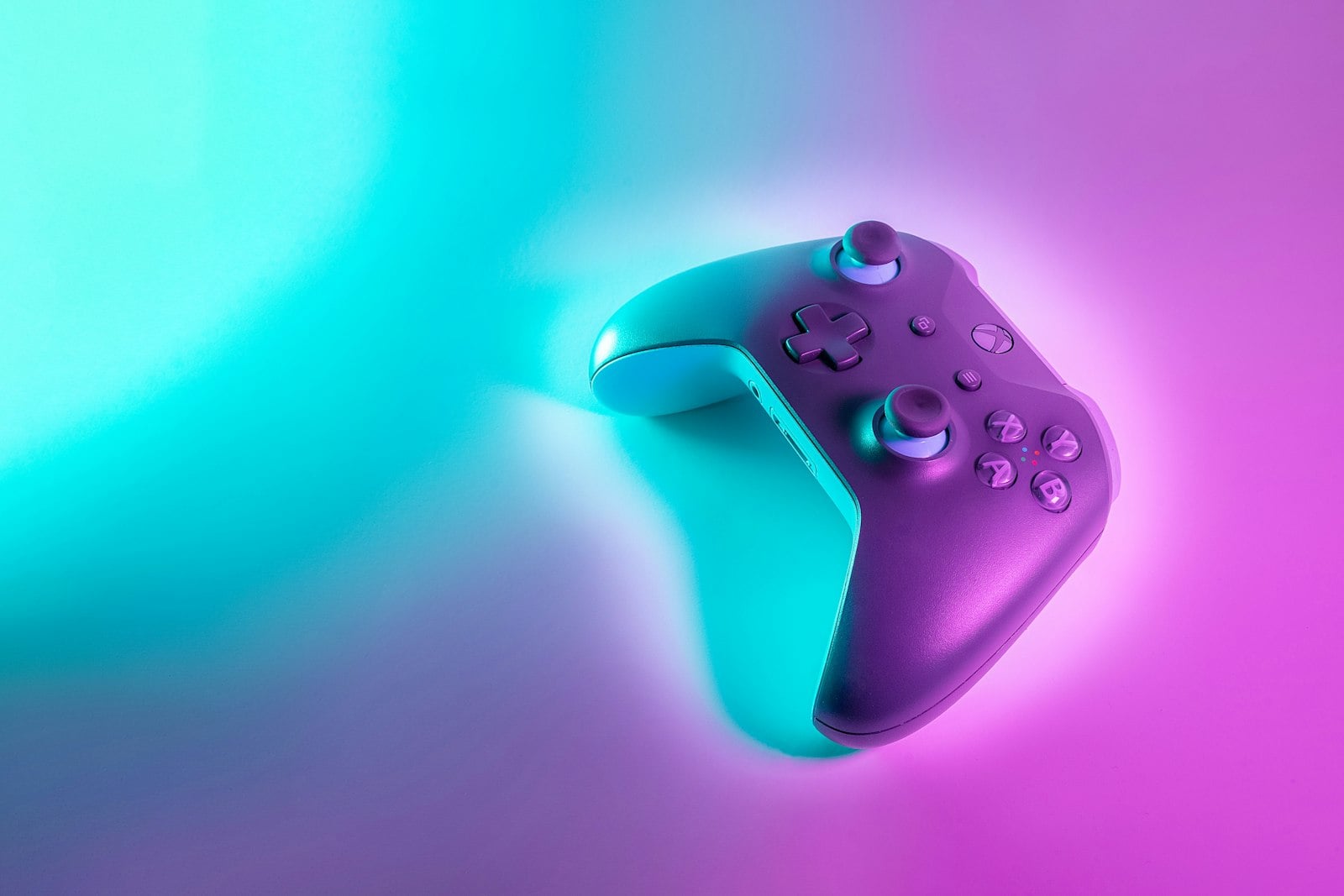
We have already seen this play out. Console prices creeping upward, accessories becoming shockingly expensive, and “premium” controllers costing as much as older consoles once did are not coincidences. Tariffs compound existing pressures like inflation, chip shortages, logistics disruptions, and corporate consolidation. Under a tariff-heavy trade policy, those pressures intensify rather than ease.
PC gaming is hit even harder. PC gamers rely on discrete components, GPUs, CPUs, motherboards, RAM, storage, power supplies, cases, cooling solutions, and peripherals. Each of these parts has its own supply chain, and many are directly targeted by tariffs on electronics, metals, or finished goods. GPUs alone are a perfect storm. They require advanced semiconductor fabrication, specialized materials, and global coordination. Add tariffs into the mix, and prices balloon even further. When gamers complain about GPU prices being absurd, tariffs are not the only factor, but they are a significant accelerant.
Tariffs also distort market behavior in ways that harm consumers. When companies anticipate tariffs, they may front-load imports, causing artificial shortages later. They may delay product launches, restrict regional availability, or prioritize higher-margin products over budget options. This leads to fewer affordable entry points for new gamers. Gaming becomes less accessible, more elitist, more stratified by income. The kid who might have built a budget PC or saved up for a console finds the goalposts moved further away.
Physical games are not immune either. Discs, cartridges, packaging, printed materials, and shipping all involve imported components and materials. Even digital games are indirectly affected, because the hardware they run on becomes more expensive, and because development costs rise when studios pay more for equipment. When costs rise across the board, publishers look for ways to maintain profits. That often means higher game prices, more aggressive monetization, more microtransactions, more battle passes, more subscription lock-ins, and more content sliced off and sold separately.
Tariffs also hurt smaller developers and hardware makers disproportionately. Large corporations may have the leverage to negotiate better terms, shift suppliers, or absorb short-term losses. Indie studios, boutique hardware manufacturers, and niche peripheral makers do not. When their costs rise, they either raise prices sharply or exit the market entirely. This reduces diversity and innovation in gaming. The market becomes more homogenized, more dominated by a handful of giants, and less willing to take creative risks.
Another overlooked aspect is how tariffs affect repairability and longevity. Replacement parts become more expensive. Importing spare components costs more. Third-party repair shops face higher overhead. As a result, devices are more likely to be discarded rather than repaired. This accelerates e-waste and reinforces a disposable tech culture. Gamers end up paying more not just to buy hardware, but to maintain it, or to replace it prematurely.
The idea that tariffs will magically bring gaming manufacturing back to the United States is largely a fantasy, at least in the short to medium term. Semiconductor fabrication requires massive capital investment, specialized expertise, and years of development. Even with government subsidies, building domestic capacity takes time. In the meantime, tariffs do not create factories overnight. They simply make imported goods more expensive. Gamers are asked to endure higher prices now for hypothetical future benefits that may never fully materialize.
There is also a psychological component. Tariffs normalize price hikes. Once consumers get used to paying more, prices rarely come back down. Even if tariffs are later reduced or removed, companies often keep prices elevated, citing other costs or market conditions. Tariffs thus have a ratchet effect. Prices go up quickly and come down slowly, if at all.
Gaming culture itself is affected. When gaming becomes more expensive, it changes who gets to participate. It affects multiplayer communities, modding scenes, esports pipelines, and creative ecosystems. It narrows the funnel. It turns gaming from a broadly accessible medium into something increasingly gated by wealth. That has social consequences, cultural consequences, and even political consequences, because gaming is one of the primary spaces where younger generations socialize, create, and express themselves.
It is also worth noting that tariffs do not exist in isolation. They interact with other Trump-era policies and attitudes, including hostility toward science, technology, and global collaboration. Gaming thrives on international cooperation. Engines, tools, middleware, art assets, and talent flow across borders. A trade environment defined by suspicion, retaliation, and economic nationalism makes everything harder. Studios face uncertainty. Investors hesitate. Projects get canceled. Risk-taking declines.
Some defenders of tariffs argue that higher prices are a necessary sacrifice for national strength or economic independence. But that framing ignores who is being asked to sacrifice and who benefits. Gamers are not oligarchs. They are students, workers, artists, disabled people, neurodivergent people, and marginalized communities who often rely on gaming as one of the few accessible forms of joy and connection. Making gaming more expensive is not some abstract geopolitical maneuver. It is a concrete harm to real people.
There is also an irony here. Gaming is one of America’s strongest cultural exports. U.S.-based studios, platforms, and creators shape global gaming culture. Policies that make gaming more expensive at home weaken that position. They reduce domestic engagement, shrink audiences, and limit the next generation of developers. In trying to assert economic dominance, tariffs can end up undermining soft power and creative leadership.
From a data perspective, tariffs are blunt instruments. They do not target inefficiency precisely. They do not distinguish between exploitative practices and legitimate trade. They simply raise costs. In a complex, interdependent industry like gaming, blunt instruments cause collateral damage. The signal gets lost in the noise, and consumers bear the burden.
As a gamer, a scientist, and a data-minded person, it is frustrating to see how often this reality is ignored. Discussions about tariffs are drenched in ideology and stripped of material analysis. People argue in slogans while prices climb quietly in the background. Controllers hit eighty dollars. Headsets push past two hundred. GPUs become luxury items. And we are told this is strength.
Gaming does not need to be a luxury hobby. It became what it is because of scale, accessibility, and shared enthusiasm. Tariffs push it in the opposite direction. They fragment the audience, distort the market, and privilege those who can afford to shrug off price increases. That is not a healthy ecosystem. It is a brittle one.
In the end, Trump tariffs make gaming more expensive in the most predictable way possible. They raise costs at every stage of production and distribution, and those costs land on players. They do not foster innovation. They do not meaningfully protect consumers. They do not magically rebuild supply chains overnight. What they do is make a beloved medium harder to access, harder to sustain, and more unequal.
If we care about gaming as culture, as art, as community, and as an industry, we cannot ignore trade policy. It matters. It shapes the material conditions under which games are made and played. Tariffs are not just numbers on a spreadsheet. They are higher price tags, fewer options, and lost possibilities. And in gaming, those losses are felt immediately, viscerally, and personally.